Is Your Aging Parent's Home Safe? A St. Lucie County Home Safety & Fall Prevention Guide
A practical, room-by-room guide to help families in Port St. Lucie, Fort Pierce, and across St. Lucie County evaluate an aging parent's home and everyday support needs
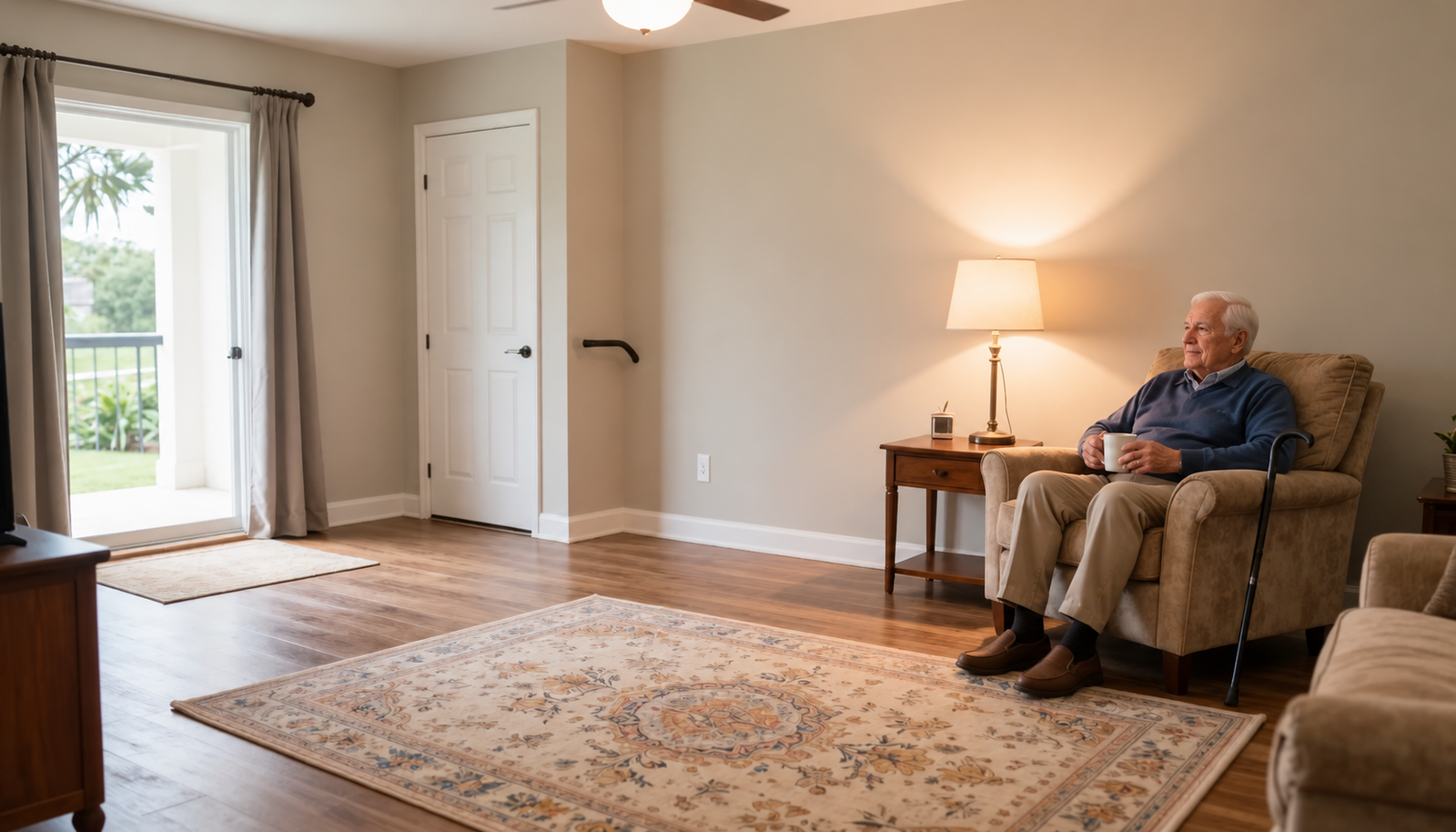
You walk into your parent's home in Port St. Lucie and notice a small rug has shifted near the kitchen doorway again.
The hallway light is out, the same one you mentioned last visit. A cord from the living room lamp stretches across the path to the bathroom. None of it seemed urgent a year ago. Now, standing in the doorway, you wonder whether the home that has always felt familiar is still as safe as it used to be.
That quiet worry is one many St. Lucie County families share. This guide is written to help you think it through. It is educational and general — not medical advice, not a safety inspection, and not a promise that any change or service will prevent falls. It offers a practical way to look at an aging parent's home room by room, to notice everyday hazards, and to understand how non-medical home care may fit into a broader plan of support.
To learn about the private-pay non-medical home care we provide, visit our home care services page, or see our service areas.
Quick Answer
Families can evaluate an aging parent's home by looking at walking paths, lighting, bathrooms, bedrooms, stairs and entrances, rugs and flooring, frequently used household items, everyday mobility, personal care routines, meal preparation, and nighttime movement. Home modifications and additional assistance with everyday activities can both be parts of a broader safety plan. No modification or caregiver service guarantees that falls will be prevented. For concerns about balance, mobility, or health, contact the senior's physician or an appropriate healthcare professional.
1. How Can Families Tell Whether an Aging Parent's Home Is Still Safe?
In short: Walk through the home room by room and look at how your loved one actually moves through it each day — where they walk, where they reach, where they sit, and how they get to the bathroom at night.
A home safety review does not require special equipment. It begins with attention. A family helping an aging parent in Port St. Lucie might start by walking through the home and looking at lighting, pathways, bathrooms, and frequently used areas. A family coordinating support for a loved one in Fort Pierce may also need to consider whether everyday tasks are becoming difficult when relatives are not present. These are general examples, not actual clients.
As you walk through, notice the small things: a rug that slides, a cord that crosses a path, a light that has burned out, a shelf that requires reaching. These everyday details often matter more than any single large change. The goal is not to redesign the home, but to notice where everyday movement has become less certain.
2. Room-by-Room Home Safety Checklist for Aging Parents
This checklist is one of the most useful parts of this guide. Work through it slowly, room by room. It is educational guidance only — not construction, medical, or accessibility-code advice. Where grab bars, shower seating, or handrails are mentioned, have appropriate products installed by someone qualified rather than relying on temporary fixes.
Bathroom
- Is there adequate lighting, including a light that is easy to turn on from the doorway or at night?
- Are wet or slippery surfaces addressed with non-slip mats or strips?
- Is the pathway to the toilet and shower clear of obstacles?
- Are grab bars installed where appropriate, such as near the toilet and shower, by someone qualified?
- Is there appropriate shower seating when needed?
- Are frequently used toiletries within comfortable reach, avoiding bending or reaching overhead?
- Is the toilet easy to access and use without unsteady movement?
Bedroom
- Is the pathway from the bed to the doorway clear?
- Is there night lighting, such as a plug-in night light or a lamp within easy reach of the bed?
- Are frequently used items (glasses, phone, water, medications) within comfortable reach of the bed?
- Is the furniture stable, without wheels or wobbly legs that could shift when leaned on?
- Are loose rugs removed or secured firmly to the floor?
- Are electrical cords kept along walls and away from walking paths?
- Is there easy access to a phone or communication device at the bedside?
Hallways
- Is there adequate lighting throughout, including any switches at each end?
- Are walking paths clear of clutter, boxes, and stored items?
- Are loose rugs removed or secured?
- Are electrical cords kept off the walking surface?
- Are changes in flooring (such as a transition strip between rooms) flat and secure?
Living / Dining Areas
- Is seating stable and at a height that is easy to get up from?
- Is furniture placed to leave clear, wide walking paths?
- Are frequently used items (remote, phone, tissues) within comfortable reach of the favorite chair?
- Are rugs and cords kept away from walking paths?
- Is there adequate lighting for reading and moving around safely?
Kitchen
- Are frequently used items (plates, cups, pantry staples) within easy reach, avoiding high shelves?
- Is unnecessary reaching or climbing (such as standing on a chair) avoided?
- Is the floor space clear and free of spills, rugs, or cords?
- Is there adequate lighting over work areas?
- Are commonly used foods and supplies easy to access without bending or stretching?
Stairs / Entrances
- Is there adequate lighting at stairs and entrances, inside and out?
- Are pathways clear of shoes, packages, or obstacles near the door?
- Are handrails present and secure where appropriate, on both sides if possible?
- Are uneven surfaces or steps clearly visible and in good repair?
- Is there safe access into and out of the home, including a clear step or threshold?
3. Home Safety Reference Table
This table summarizes what families can check in each area and why it matters. Use it alongside the room-by-room checklist above.
| Area | What Families Can Check | Why It Matters |
|---|---|---|
| Bathroom | Lighting, wet surfaces, clear pathways, grab bars where appropriate, shower seating when needed, toiletries within reach, easy toilet access | Bathrooms are used often and at night; wet surfaces and awkward reaching are common everyday concerns. |
| Bedroom | Clear path from bed to doorway, night lighting, items within reach, stable furniture, loose rugs, cords, phone access | Getting in and out of bed and moving to the bathroom at night are frequent everyday movements. |
| Hallways | Adequate lighting, clear walking paths, clutter, loose rugs, cords, flooring changes | Hallways connect the rooms a senior uses most and are walked through repeatedly each day. |
| Living / Dining Areas | Stable seating, furniture placement, clear paths, items within reach, rugs and cords, lighting | These are where a senior spends much of the day sitting, eating, and moving around. |
| Kitchen | Frequently used items within easy reach, avoiding reaching or climbing, clear floor space, lighting, easy access to foods and supplies | Reaching overhead or climbing for items can be an everyday hazard in the kitchen. |
| Entrances / Stairs | Lighting, clear pathways, handrails where appropriate, uneven surfaces, obstacles near entrances, safe access in and out | Entrances and stairs are where a senior transitions between outside and inside the home. |
4. Why Nighttime Home Safety Deserves Extra Attention
The same home that feels manageable during the day can feel very different after midnight. Reduced visibility, waking from deep sleep, and the short walk between the bedroom and bathroom all become more uncertain in the dark. A clear, well-lit path at night is one of the simplest and most meaningful changes a family can review.
Look at the lighting between the bedroom and bathroom, keep walking paths clear, and make sure frequently used items are accessible from the bed. Avoid placing unnecessary obstacles along the nighttime route. It is also worth paying attention to whether nighttime support needs are changing — for example, if your loved one is getting up more often or seems less steady in the dark.
For a deeper look at nighttime support, read our guide to overnight home care and nighttime support in St. Lucie County.
5. When Might an Aging Parent Need More Than Home Modifications?
A home can be well organized while an older adult may still benefit from help with everyday activities. Safety is not only about the environment — it is also about whether daily routines have become harder to manage.
Families may notice increasing difficulty with:
- Bathing, dressing, and grooming
- Meal preparation and regular meals
- Mobility around the home
- Household tasks and light housekeeping
- Errands and getting to appointments
- Following familiar daily routines
- Companionship and social connection
- Remembering established routines
- Family caregivers needing relief and rest
These signs do not automatically mean someone needs professional home care. They are signals worth paying attention to. For a broader look at the small changes families often notice first, read our article on the signs your aging parent may need extra help at home.
6. How Can Non-Medical Home Care Support an Older Adult at Home?
In short: Non-medical home care provides hands-on help with the everyday activities that can become harder with age — while clearly staying within non-medical support, not skilled nursing.
Not Alone Homecare, LLC is a Florida licensed non-medical home care agency (AHCA License #299995616). Depending on the agreed care plan, a non-medical caregiver may help with:
- Personal care and bathing assistance
- Companion care and companionship
- Meal preparation
- Mobility assistance
- Medication reminders (caregivers do not administer medications)
- Laundry and light housekeeping
- Doctor visit assistance and accompaniment
- Bedbound support and incontinence assistance
- Errands and homemaker services
- Respite support for family caregivers
These services are non-medical. They do not include skilled nursing, medical treatment, or medication administration, and they do not guarantee that falls will be prevented or that any particular safety outcome will result. To learn more, explore our non-medical home care services.
7. Is Non-Medical Home Care the Same as Home Health Care?
In short: No. Non-medical home care focuses on everyday activities and personal support. Skilled home health care involves medical or clinical services provided by appropriately licensed healthcare professionals.
Non-medical home care focuses on assistance with everyday activities, personal care, companionship, homemaker support, meals, mobility assistance, and reminders. Skilled home health care involves medical or clinical services — such as nursing, therapy, or wound care — provided by appropriately licensed healthcare professionals, often ordered by a doctor.
Not Alone Homecare, LLC is a non-medical home care agency. We do not provide skilled nursing, medical treatment, or medication administration. Being clear about this distinction helps families understand exactly what we can and cannot provide. If your loved one needs skilled home health, a physician can order those services separately.
8. The Hospital-to-Home Connection
In short: When an older adult returns home after a hospital stay, reviewing the home environment alongside everyday support can be especially helpful.
Coming home from the hospital is a relief, but it is also a vulnerable time. Strength and balance may not have fully returned, and the first weeks at home can be uncertain. Reviewing lighting, pathways, and frequently used items — alongside non-medical help with daily living — can support a calmer recovery. Non-medical home care does not replace skilled home health ordered by a doctor. For a full guide to preparing for a safe recovery at home, read our article on hospital discharge home care.
9. If You Are Coordinating Care From a Distance
If you live outside the area, you may not see the small day-to-day changes that happen between visits. Someone managing care from a distance may find it useful to have a trusted local person periodically look at how everyday routines and household needs are changing — whether a pathway has become cluttered, whether meals are being prepared regularly, or whether getting around the home has become more uncertain.
This is not monitoring or medical supervision unless separately arranged. It is simply staying informed. For a practical guide to managing care from another state, read our article on long-distance caregiving in Port St. Lucie.
Senior Home Safety Across St. Lucie County and the Treasure Coast
Not Alone Homecare, LLC is a licensed non-medical home care agency (AHCA License #299995616) serving families in Port St. Lucie, Fort Pierce, and surrounding Treasure Coast communities. The same home safety concerns tend to come up wherever a senior lives — lighting, pathways, bathrooms, and the question of whether everyday tasks have become harder.
Whether you are exploring home care in Port St. Lucie, home care in Fort Pierce, or home care throughout St. Lucie County, we are glad to listen and help you understand your options. You can also explore our service areas and our FAQ page.
Explore Home Care Services Near You
Helpful Home Care Resources for Families
About This Article
Author: Prepared by Not Alone Homecare, LLC — a licensed Florida non-medical home care agency (AHCA License #299995616) serving Port St. Lucie, Fort Pierce, and the Treasure Coast.
Published: October 4, 2026. This article provides general educational information only and is not medical, legal, construction, or accessibility-code advice. Not Alone Homecare, LLC does not diagnose medical conditions, provide skilled nursing care, administer or manage medications, or guarantee caregiver availability, acceptance, a specific schedule, or an immediate start date. No home modification or caregiver service guarantees that falls will be prevented. Always contact an appropriate healthcare professional for concerns about health, balance, or mobility, and call 911 for any emergency.
Frequently Asked Questions About Senior Home Safety
How can I make my aging parent's home safer?
Families can begin by walking through the home room by room and looking at walking paths, lighting, bathrooms, bedrooms, hallways, kitchens, and entrances. Clearing clutter, securing loose rugs, improving lighting, keeping frequently used items within easy reach, and reviewing nighttime pathways are practical starting points. Home modifications and additional assistance with everyday activities can both be parts of a broader safety plan. No modification or caregiver service guarantees that falls will be prevented.
What are common home safety hazards for older adults?
Common hazards include loose rugs, cluttered or obstructed walking paths, poor lighting, wet bathroom surfaces, electrical cords across floors, hard-to-reach items, unstable furniture, uneven entrances, and stairs without secure handrails. Families can review these areas as part of a general home safety check. For concerns about health, balance, or mobility, contact the senior's physician or an appropriate healthcare professional.
Which rooms should families check first for senior home safety?
Bathrooms, bedrooms, and hallways are often good places to begin because they are used frequently and at night. Kitchens, living and dining areas, and entrances or stairs are also important to review. A room-by-room walkthrough helps families notice small issues before they become larger concerns.
How can families help reduce fall hazards at home?
Families can help reduce everyday fall hazards by clearing walking paths, removing loose rugs or securing them firmly, improving lighting (especially between the bedroom and bathroom), keeping frequently used items within comfortable reach, addressing wet bathroom surfaces, and reviewing stairs and entrances. These steps are educational and supportive, not a guarantee that falls will not occur. A healthcare professional can evaluate balance, mobility, and medication-related concerns.
Can non-medical home care help with everyday mobility?
Yes. A non-medical caregiver can provide hands-on support with everyday mobility, such as helping a senior get out of bed or a chair safely, walking with them between rooms, and assisting with bathroom visits. This is non-medical assistance, not skilled nursing, and does not guarantee that falls will be prevented. Families should confirm available services and scheduling with Not Alone Homecare.
What can a non-medical caregiver help with at home?
A non-medical caregiver may help with personal care, bathing assistance, dressing and grooming, meal preparation, mobility assistance, medication reminders (not administration), laundry, light housekeeping, errands, doctor visit accompaniment, bedbound support, incontinence assistance, homemaker services, companionship, and respite support. Caregivers do not provide skilled nursing, medical treatment, or medication administration.
Is non-medical home care the same as home health care?
No. Non-medical home care focuses on assistance with everyday activities, personal care, companionship, homemaker support, meals, mobility assistance, and reminders. Skilled home health care involves medical or clinical services provided by appropriately licensed healthcare professionals. Not Alone Homecare, LLC is a non-medical home care agency and does not provide skilled nursing or medical care.
When should a family consider additional help at home?
A family may consider additional help when everyday activities such as bathing, dressing, meal preparation, mobility, household tasks, or daily routines become more difficult, or when a family caregiver needs relief. These signs do not automatically mean someone needs professional care. For concerns about health or cognition, contact the senior's physician or an appropriate healthcare professional.
Can home care help after an older adult returns from the hospital?
Yes. After a hospital stay, an older adult may be weaker or less steady, and reviewing the home environment alongside non-medical support with daily living can be helpful. Non-medical home care does not replace skilled home health ordered by a doctor. Families should confirm availability and scheduling with Not Alone Homecare.
Does Not Alone Homecare provide non-medical home care in Port St. Lucie and Fort Pierce?
Not Alone Homecare, LLC is a licensed non-medical home care agency (AHCA License #299995616) serving Port St. Lucie, Fort Pierce, and surrounding St. Lucie County and Treasure Coast communities. Care availability and scheduling vary, so families should contact us through our Contact page to confirm whether support is available for their situation. Visit our Contact page to get started, or explore our services and FAQ page.
Could Your Loved One Use More Support at Home?
If everyday activities are becoming more difficult, you do not have to figure it out alone. Not Alone Homecare, LLC is here to listen and help you understand your non-medical home care options in Port St. Lucie, Fort Pierce, and surrounding St. Lucie County. We cannot guarantee caregiver availability, a specific schedule, or an immediate start date — but we can help you understand your next step. A home with potential hazards does not mean someone needs professional care; it simply means it may be worth a conversation.
Licensed Non-Medical Home Care Agency • AHCA License #299995616
Have more questions? Visit our FAQ page.