
Signs Your Aging Parent May Need Extra Help at Home
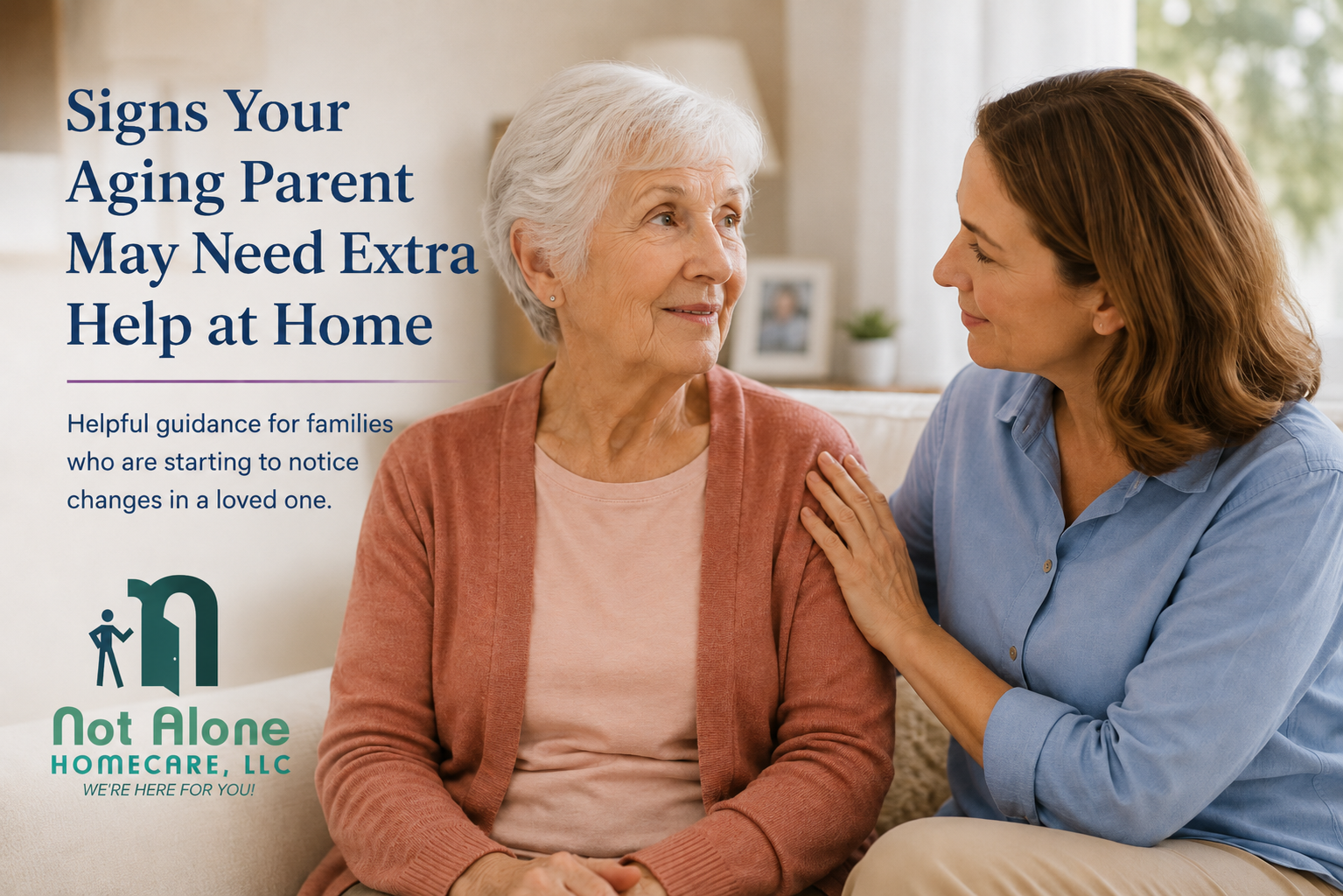
An aging parent may need additional help at home when everyday activities such as bathing, preparing meals, housekeeping, mobility, remembering routines, or safely managing the day become increasingly difficult. Changes in isolation, personal hygiene, nutrition, the condition of the home, or caregiver stress can also signal that it may be time for the family to discuss additional support.
Noticing these changes in a parent is rarely easy. Aging is gradual, and the shift from full independence to needing a little extra help seldom happens overnight. This guide is written for adult children, spouses, and family caregivers who are quietly asking themselves, does my parent need more help at home? It is educational, not diagnostic—no single sign means your parent automatically needs professional care. Together, the signs can help you decide when it may be time to start a gentle conversation.
Why Families Miss Early Signs
When we see our loved ones often, small changes blend into the background of everyday life. When we live in another city or state, we only catch glimpses during phone calls or holiday visits. Many seniors are also fiercely protective of their independence and may quietly mask their struggles out of fear of burdening their family or being asked to leave their home.
Paying close attention during your next visit can make a meaningful difference. Knowing what to look for allows you to introduce support before a small struggle becomes a safety concern. If you are coordinating care from another state, our article on long-distance caregiving in Port St. Lucie offers additional guidance.
Common Signs Your Aging Parent May Need Extra Help
The signs below are common, but every family and every senior is different. Read them as a whole rather than as a checklist, and consider how several changes together may be telling a larger story.
1Difficulty with bathing, dressing, or grooming
A noticeable decline in personal hygiene—wearing the same clothes for several days, unwashed hair, or avoiding the shower—can signal that bathing and dressing have become physically difficult or frightening. This is often one of the first changes families notice.
2Changes in meal preparation or eating habits
Expired food in the refrigerator, a lack of fresh groceries, or noticeable weight loss may suggest that shopping, cooking, and standing at the stove have become too taxing. Nutrition often slips quietly before families realize it.
3Increasing difficulty keeping the home clean
When a normally tidy parent lets clutter accumulate, leaves dishes piling up, or allows tripping hazards to remain on the floor, light housekeeping may have become overwhelming. The condition of the home often reflects how the day is going.
4Mobility becoming more difficult
Holding onto walls or furniture while walking, hesitating at stairs, or unsteadiness when standing all suggest mobility has become a challenge. This raises the risk of falls and is a strong reason to consider mobility assistance.
5Increased isolation or loneliness
Seniors may withdraw from social activities or stop leaving the house if driving becomes difficult or they feel unsteady on their feet. Prolonged isolation can affect emotional well-being and overall quality of life.
6Difficulty keeping up with normal daily routines
When basic routines—taking out the trash, watering plants, feeding a pet, or paying bills on time—start slipping, it often means a loved one could benefit from a compassionate companion to help organize and support their day.
7Family members becoming overwhelmed with caregiving
Sometimes the clearest sign that help is needed is your own exhaustion. If you are missing work, losing sleep, or sacrificing your own health to care for a parent, respite support can help both of you.
8Needing more help getting to appointments or completing errands
If your parent is missing doctor appointments, running out of groceries, or relying heavily on others for transportation, accompaniment and errand support can help them stay on top of their health and daily needs.
9An increasing need for reminders
While minor forgetfulness is a normal part of aging, consistently missing medications, forgetting appointments, or losing track of bills can compromise safety and health. Gentle reminders can make a meaningful difference.
10A spouse or family caregiver needing respite
When the person providing most of the care begins to tire, feel stretched thin, or experience their own health concerns, additional in-home support can protect both the caregiver and the person receiving care.
If several of these signs sound familiar, it does not mean something is wrong—it means your parent may benefit from a little extra support to stay safe and comfortable at home. The next step is simply starting a gentle conversation and learning what kind of help is available.
When Should You Consider In-Home Care for an Aging Parent?
Families may consider non-medical home care when a loved one wants to remain at home but would benefit from additional assistance with everyday activities, companionship, personal care, homemaker tasks, meals, mobility, reminders, or caregiver relief. The decision depends on the person's individual needs and the family's situation—there is no single right moment that applies to everyone.
A good time to explore care is before a crisis occurs. Introducing a caregiver gradually—even just a few hours a week for companionship or light housekeeping—can help your loved one adjust comfortably and can prevent small struggles from becoming larger safety concerns. If your parent is returning home after a hospital stay, transitional support can be especially helpful; our article on hospital discharge home care in Port St. Lucie explains how that works.
You might also consider home care when a spouse or family caregiver is showing signs of burnout. Respite support protects both the caregiver and the person receiving care, and it allows family members to return to their role feeling rested. Learn more in our comparison of respite care vs. 24-hour home care in St. Lucie County.
What Can Non-Medical Home Care Help With?
Non-medical home care supports older adults with the everyday activities that make life safe, comfortable, and meaningful at home. It is distinctly different from skilled nursing or medical treatment—caregivers do not provide clinical care, wound care, or medical procedures. Instead, they help with the routines of daily living.
At Not Alone Homecare, LLC, our caregivers provide a wide range of non-medical support, including:
- Personal care and respectful bathing assistance
- Companion care and friendly conversation
- Meal preparation and support with eating habits
- Light housekeeping and laundry
- Mobility assistance and fall prevention
- Medication reminders
- Errands, grocery shopping, and accompaniment
- Doctor visit assistance
- Bedbound support
- Dignified incontinence assistance
- Homemaker services
- Respite support for family caregivers
To explore our full range of support options, please visit our Services page. If you are weighing the difference between companionship and hands-on personal care, our article on companion care vs. personal care in St. Lucie County can help you think it through.
Home Care vs. Family Care Alone
Many families provide wonderful care on their own, and adding in-home support does not mean family caregiving is inadequate. The table below is meant to help you see where additional support can complement what relatives already provide.
| Family Situation | Family Care Alone | Additional In-Home Support |
|---|---|---|
| Companionship and conversation | Provided when family is available | Regular, dependable companionship throughout the week |
| Meal preparation | Meals prepared around family visits | Consistent, nutritious meals prepared daily |
| Personal care (bathing, dressing, grooming) | Can be uncomfortable or physically difficult | Respectful, dignity-focused assistance |
| Household tasks (cleaning, laundry) | Often deferred when time is limited | Completed on a regular, manageable schedule |
| Transportation and accompaniment | Dependent on family availability | Dependable accompaniment to appointments and errands |
| Family caregiver breaks | Rare or rushed | Planned respite so caregivers can rest and recharge |
| Regular support when relatives live far away | Limited to visits and phone calls | Steady, in-person support between family visits |
The goal is balance—keeping family at the center of your loved one's life while easing the tasks that have become difficult, rushed, or exhausting.
Helping Families in Port St. Lucie and St. Lucie County
Not Alone Homecare, LLC is a Florida licensed non-medical home care agency (AHCA License #299995616) serving families across the Treasure Coast. We regularly work with adult children who are helping an aging parent remain at home in Port St. Lucie, spouses in Fort Pierce who need a few hours of respite each week, and families living outside the area who are coordinating dependable care for a loved one in St. Lucie County.
If you are exploring home care in Port St. Lucie, considering support for a parent in home care in Fort Pierce, or looking for home care throughout St. Lucie County, we are glad to talk through your situation. You can also see all of the communities we serve on our Service Areas page.
Every family's situation is unique, and there is no pressure to commit to anything during a first conversation. We are here to listen and help you understand your options.
Frequently Asked Questions About Helping an Aging Parent at Home
How do I know if my aging parent needs help at home?
An aging parent may need additional help at home when everyday activities such as bathing, preparing meals, housekeeping, mobility, remembering routines, or safely managing the day become increasingly difficult. Changes in isolation, personal hygiene, nutrition, the condition of the home, or caregiver stress can also signal that it may be time to discuss additional support.
What are common signs an elderly parent needs additional support?
Common signs include difficulty with bathing, dressing, or grooming; changes in meal preparation or eating habits; a home that is becoming harder to keep clean; reduced mobility; increased isolation; trouble keeping up with daily routines; missed appointments or medication reminders; and family caregivers becoming overwhelmed.
What can non-medical home care help with?
Non-medical home care can help with personal care, companion care, bathing assistance, meal preparation, mobility assistance, medication reminders, laundry, light housekeeping, errands, doctor visit accompaniment, bedbound support, incontinence assistance, homemaker services, and respite support for family caregivers. It does not include skilled nursing or medical treatment.
Does needing home care mean my parent has to leave their home?
No. Non-medical home care is designed to help older adults remain safely and comfortably in their own homes by providing assistance with everyday activities, companionship, and personal care, rather than requiring them to move.
Can home care help if family members already provide care?
Yes. Non-medical home care can complement the care family members already provide by offering respite support, helping with tasks that have become physically difficult, and providing regular companionship so family caregivers can rest and recharge.
What if I live far away from my aging parent?
Families who live far away can arrange non-medical home care to provide regular, dependable support for a loved one. A caregiver can help with daily routines, meals, errands, and companionship, and keep families informed about how their loved one is doing.
What is the difference between companion care and personal care?
Companion care focuses on companionship, conversation, meal preparation, light housekeeping, errands, and accompaniment to appointments. Personal care includes hands-on assistance with bathing, dressing, grooming, mobility, toileting, and incontinence support.
How can I learn about home care in Port St. Lucie or St. Lucie County?
Not Alone Homecare, LLC is a Florida licensed non-medical home care agency (AHCA License #299995616) serving Port St. Lucie, Fort Pierce, and surrounding St. Lucie County communities. You can request information through our Contact page or call 772-408-3967.
Does Your Loved One Need a Little More Help at Home?
If you are starting to notice changes in an aging parent or loved one, families in Port St. Lucie, Fort Pierce, and surrounding St. Lucie County communities can contact Not Alone Homecare, LLC to discuss compassionate non-medical home care options. There is no pressure—just a helpful conversation about what may be possible.
Not Alone Homecare, LLC • Licensed Non-Medical Home Care Agency • AHCA License #299995616