
Overnight Home Care for Seniors in St. Lucie County: Is It the Right Choice for Your Loved One?
A compassionate guide to nighttime safety, mobility, dementia-related needs, and caregiver rest for families in Port St. Lucie and the Treasure Coast
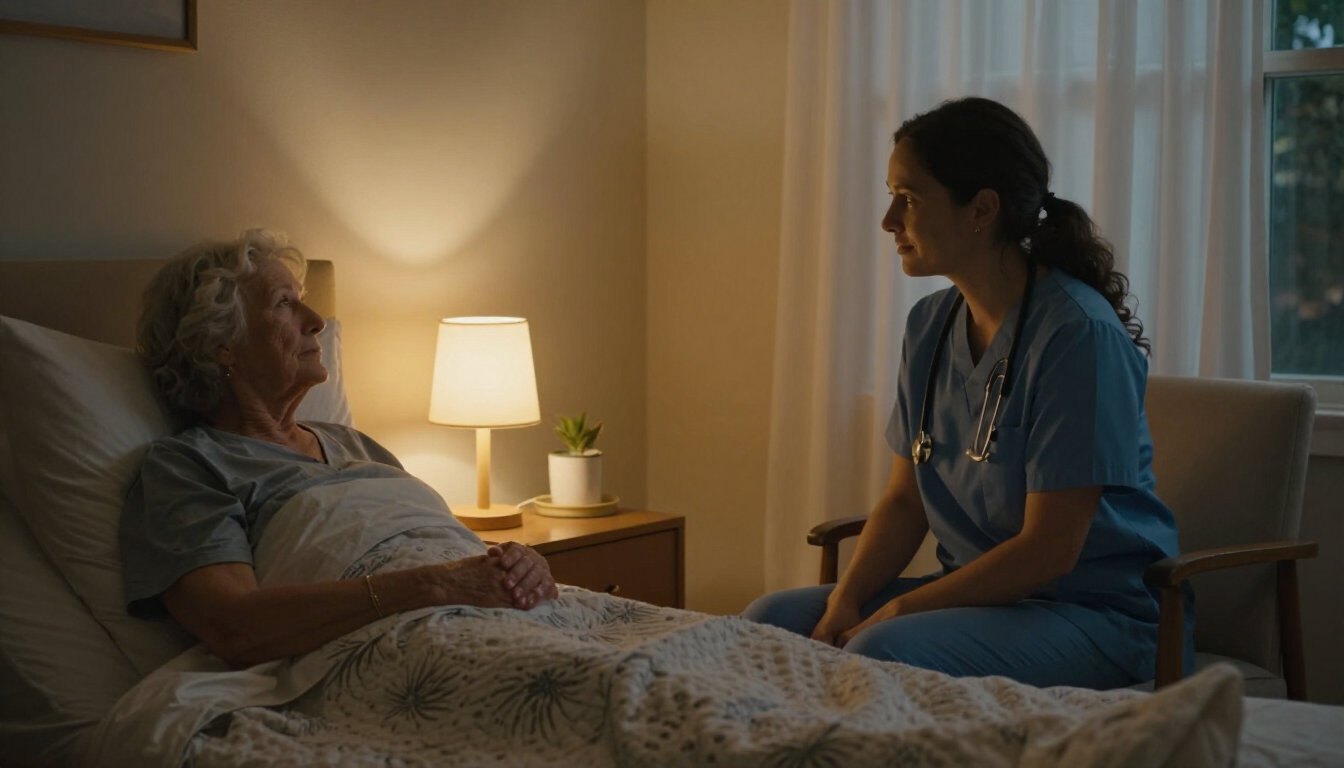
It is a little after 2 a.m. in Port St. Lucie. Your mother wakes and needs the bathroom.
The hallway is dark. Her walker is right where she left it, beside the nightstand, but the distance from the bed to the door feels longer than it used to. She does not want to wake anyone. Down the hall, the family caregiver who has been by her side all day is finally, deeply asleep. She sits up, steadies herself, and reaches for the walker.
If you are reading this, that scene probably feels familiar. Maybe you are the adult child who lives in another state and worries every night. Maybe you are the spouse or sibling who has not slept through the night in months. Either way, the quiet hours after midnight can be the most worrying part of caring for an aging parent at home.
That is where overnight home care comes in. This guide explains what overnight home care is, what an overnight caregiver actually does, how it compares with 24-hour home care, and how it may help families in Port St. Lucie, Fort Pierce, and across St. Lucie County and the Treasure Coast. It is educational and general — not medical advice, and not a promise that any particular service or schedule will be available. To learn about the private-pay non-medical home care we provide, visit our home care services page, or see our service areas.
Quick Answer
Overnight home care is non-medical nighttime support that helps a senior stay safe and comfortable at home during the hours when risks — falls, confusion, bathroom needs, and caregiver exhaustion — often rise. An overnight caregiver may help with mobility, bathroom visits, personal care, hydration and meal reminders, companionship, and dementia-related reassurance. It is not skilled nursing, and whether a caregiver remains awake all night depends on the care arrangement. The right choice depends on your loved one's needs, family involvement, and service availability.
1. What Is Overnight Home Care?
In short: Overnight home care is non-medical nighttime support that helps a senior with mobility, bathroom visits, personal care, hydration and meal reminders, companionship, dementia-related confusion, and the activities of daily living during the night — all in the comfort of their own home.
It is important to understand what overnight home care is, and what it is not. Overnight home care is provided by a non-medical caregiver who comes into the home to offer hands-on help and a calming presence during nighttime hours. It does not include skilled nursing, medical treatment, or medication administration. A non-medical caregiver can provide medication reminders, but only healthcare professionals administer and manage medications.
It is also important not to assume that every overnight caregiver remains awake and alert for the entire night. Schedules and responsibilities depend on the care arrangement. Some overnight care is designed around a caregiver who is available to respond whenever help is needed, while other arrangements are built for a caregiver who stays awake throughout the shift. Families should confirm exactly how scheduling works — and whether awake-overnight care is available — directly with Not Alone Homecare.
2. Why Can Nighttime Be More Difficult for Some Older Adults?
The same home that feels manageable during the day can feel very different at 3 a.m. Reduced visibility makes even familiar hallways harder to navigate. Getting out of bed in the dark requires balance, strength, and quick judgment — all of which can be more difficult for an older adult. A simple trip to the bathroom can become the moment a fall happens.
Nighttime can also be harder for people living with dementia. Darkness and disrupted sleep can increase confusion, and a senior may wake unsure of where they are or what time it is. Some families worry about wandering — a loved one getting up and moving through the home unsafely while others are asleep. Recovery after a hospitalization adds another layer: a senior who has just come home may be weaker, less steady, and more likely to need help getting out of bed at night.
And then there is the family caregiver. Night after night of broken sleep builds into real exhaustion, which can affect health, patience, and the ability to keep providing care during the day. If the person you are worried about is the caregiver as much as the senior, overnight support may help both of them. For a broader look at the small changes families notice first, read our article on the signs your aging parent may need extra help at home.
3. What Does an Overnight Home Caregiver Actually Do?
In short: An overnight caregiver helps with bedtime routines, personal care, mobility, bathroom assistance, responding when help is needed, hydration and meal reminders, companionship, and morning routines — while clearly staying within non-medical home care, not skilled nursing.
Depending on the agreed care plan, an overnight caregiver may help with:
- Bedtime routines: helping your loved one wind down, get settled, and feel comfortable for the night
- Personal care: assistance with toileting, changing clothing or incontinence products, and freshening up
- Mobility assistance: safe transfers in and out of bed and help walking to the bathroom or another room
- Bathroom assistance: walking with your loved one, helping with balance, and reducing fall risk in the dark
- Responding when help is needed: being present and available when your loved one wakes or calls out
- Hydration and meal reminders: offering water and light snacks and reminding your loved one to drink
- Meals and snacks: preparing a simple nighttime or morning item as part of the care plan
- Medication reminders: gentle reminders to take medication as directed by healthcare professionals (caregivers do not administer medications)
- Companionship: a calm, reassuring presence for a senior who feels anxious or afraid at night
- Morning routines: help getting up, dressed, and started on the day as the shift ends
- Family communication: sharing appropriate updates with authorized family members when agreed in advance
The line between non-medical home care and skilled nursing matters. A non-medical caregiver does not diagnose conditions, provide medical treatment, administer medications, perform wound care, or replace the care ordered by a doctor. If your loved one needs skilled nursing at night, a physician can order medical home health. To understand the difference between hands-on daily support and friendly companionship, see our guide to companion care vs. personal care.
4. Overnight Home Care vs. 24-Hour Home Care
Overnight home care and 24-hour home care are often confused, but they serve different situations. The table below compares them across the factors families usually think through first. Neither option is universally better — the right choice depends on your loved one's needs, family involvement, and service availability.
| Factor | Overnight Home Care | 24-Hour Home Care |
|---|---|---|
| Coverage | Nighttime hours only | Continuous day and night |
| Nighttime support | Yes — primary focus | Yes — included |
| Daytime support | Not typically included | Yes — included |
| Typical need | Help is needed mainly at night | Help is needed throughout the day and night |
| Family involvement | Family often covers daytime hours | Family may be less able to cover any hours |
| Flexibility | May fit a family that needs nighttime relief | May fit more complex, ongoing needs |
| Dementia-related support | Nighttime confusion, reassurance, redirection | Day and night confusion, reassurance, redirection |
| Mobility assistance | Nighttime transfers and bathroom visits | Day and night transfers and mobility |
| Cost structure | Based on nighttime hours and arrangement | Based on continuous coverage and arrangement |
| Who may benefit | Seniors who are safer during the day but need help at night | Seniors with significant needs around the clock |
5. When Might Overnight Care Be Enough — and When Might 24-Hour Support Be Considered?
This second table walks through common family situations and offers an educational, non-diagnostic way to think about each one. It is not a checklist for deciding on your own — for concerns about health or cognition, contact your loved one's physician or an appropriate healthcare professional.
| Situation | Overnight Care May Be Enough | 24-Hour Support May Be Considered |
|---|---|---|
| Nighttime bathroom assistance | Overnight care may be enough | If daytime help is also needed, 24-hour support may be considered |
| Family available during daytime | Overnight care may be enough | If family can no longer cover daytime, 24-hour support may be considered |
| Nighttime confusion | Overnight care may help with reassurance and redirection | If confusion is significant day and night, 24-hour support may be considered |
| Wandering concerns | Overnight care may help at night | If wandering occurs during the day too, 24-hour support may be considered |
| Significant day-and-night needs | Overnight care alone may not be enough | 24-hour support may be considered |
| Recent hospital discharge | Overnight care may help during recovery | If recovery needs continue around the clock, 24-hour support may be considered |
| Caregiver sleep deprivation | Overnight care may provide relief | If the caregiver also needs daytime relief, 24-hour support may be considered |
6. How Can Overnight Care Support Someone Living With Dementia?
In short: Overnight care may support a person living with dementia by offering calm reassurance, gentle redirection, help with nighttime confusion and bathroom visits, and a familiar routine in known surroundings — while giving the family caregiver a chance to rest.
Familiar surroundings matter deeply for someone with dementia. The bedroom they have slept in for years, the hallway they know, the sounds of their own home — these can be grounding in ways that an unfamiliar setting is not. An overnight caregiver helps preserve that familiarity while adding a steady, calming presence to the night.
Nighttime confusion is common. A person with dementia may wake unsure of the time, believe it is morning, or feel compelled to get up and move around. A caregiver trained in non-medical dementia support can offer gentle redirection — calmly guiding your loved one back to bed, reassuring them, and helping them feel safe. When bathroom visits are needed, the caregiver walks with them and reduces fall risk. And when families are worried about wandering, having someone present at night can bring real peace of mind.
Home care does not treat dementia, slow its progression, or provide medical care. For a deeper look at how non-medical home care fits into the broader picture of dementia support at home, read our article on dementia home care vs. assisted living.
7. What If the Family Caregiver Is No Longer Sleeping?
In short: When a family caregiver is exhausted from broken sleep, overnight assistance may provide relief — allowing them to rest while knowing their loved one is supported through the night.
Caregiver exhaustion is real, and it is not a sign of weakness. Months of waking at every sound, helping with bathroom visits, and lying awake worrying take a cumulative toll on health, mood, and the ability to keep caring well during the day. Many family caregivers reach a point where they are running on empty but feel guilty asking for help.
Overnight care is one way to relieve that pressure. When a dependable caregiver is present at night, the family caregiver can finally sleep — and return to the daytime role rested and more resilient. To understand how overnight support fits alongside other forms of relief, read our guide to respite care vs. 24-hour home care.
8. What Are Signs a Family Should Consider Overnight Home Care?
Every family's situation is different, but certain situations come up again and again when families begin exploring overnight care. If several of these sound familiar, it may be time to learn more.
- Your loved one needs help getting to the bathroom during the night
- They have tried to get out of bed on their own in an unsafe way
- They experience nighttime confusion or disorientation
- There are concerns about wandering at night
- They have recently come home from the hospital and are weaker or less steady
- They have mobility challenges that make nighttime movement risky
- The family caregiver is losing sleep and becoming exhausted
- Your loved one feels afraid or anxious about being alone at night
- They have had a fall or near-fall during nighttime hours
- They need reminders for hydration, personal care, or a consistent bedtime routine
9. Nighttime Home Safety Checklist
Whether or not overnight care is in place yet, a safer home at night helps every senior. Use this checklist as a practical starting point.
- ✓Clear walking paths between the bed, bathroom, and common areas
- ✓Remove loose rugs, cords, and clutter that could cause a trip
- ✓Appropriate nighttime lighting, such as motion-sensor or plug-in night lights
- ✓Mobility aids (walker, cane) kept within easy reach of the bed
- ✓Bathroom safety features, such as grab bars and a raised toilet seat
- ✓Non-slip surfaces in the bathroom and on hard floors
- ✓Emergency contacts and a phone kept accessible at the bedside
- ✓A consistent, calming bedtime routine
- ✓Medication instructions from healthcare professionals followed as directed
- ✓Consider whether additional nighttime assistance is needed
10. Hospital-to-Home Connection
In short: Nighttime support often becomes important after a hospital stay, when a senior may be weaker, less steady, and more likely to need help getting out of bed or using the bathroom during the night.
Coming home from the hospital is a relief, but it is also a vulnerable time. Strength and balance may not have fully returned, medications may have changed, and the risk of another fall or readmission can be higher in the first weeks. Overnight non-medical care does not replace skilled home health ordered by a doctor, but it can complement recovery by providing hands-on help with daily living through the night. For a full guide to preparing for a safe recovery at home, read our article on hospital discharge home care.
Overnight Home Care Across St. Lucie County and the Treasure Coast
Not Alone Homecare, LLC is a licensed non-medical home care agency (AHCA License #299995616) serving families in Port St. Lucie, Fort Pierce, and surrounding Treasure Coast communities. We understand that nighttime worries do not stop at city limits. Whether your loved one lives in Port St. Lucie or Fort Pierce in St. Lucie County, in Stuart or Palm City in Martin County, in Jensen Beach, in Vero Beach in Indian River County, in Okeechobee County, or in Palm Beach and Palm Beach County, the same concerns tend to come up after dark — bathroom trips, mobility, confusion, and caregiver sleep.
Our trained caregivers offer family-centered support, respectful communication, and dignity-focused care. We do not maintain offices in every city we serve, and overnight care availability and scheduling vary, so the best next step is to contact us to discuss your situation. You can also explore our service areas and our FAQ page.
Explore Home Care Services Near You
Helpful Home Care Resources for Families
About This Article
Author: Prepared by Not Alone Homecare, LLC — a licensed Florida non-medical home care agency (AHCA License #299995616) serving Port St. Lucie, Fort Pierce, and the Treasure Coast.
Published: September 27, 2026. This article provides general educational information only and is not medical, legal, or financial advice. Not Alone Homecare, LLC does not diagnose medical conditions, provide skilled nursing care, administer or manage medications, or guarantee caregiver availability, acceptance, a specific schedule, or an immediate start date. Whether an overnight caregiver remains awake all night depends on the care arrangement; families should confirm scheduling with Not Alone Homecare. Always contact an appropriate healthcare professional for concerns about health, and call 911 for any emergency.
Frequently Asked Questions
What is overnight home care?
Overnight home care is non-medical nighttime support that helps a senior with mobility, bathroom visits, personal care, hydration and meal reminders, companionship, and dementia-related confusion during the night. It is provided by a non-medical caregiver in the home and does not include skilled nursing or medical treatment. Schedules and responsibilities depend on the care arrangement, so families should confirm the details with Not Alone Homecare.
What does an overnight caregiver do?
An overnight caregiver may help with bedtime routines, personal care, mobility assistance, bathroom visits, responding when help is needed, hydration and meal reminders, medication reminders (not administration), companionship, and morning routines. They provide non-medical support and communicate with authorized family members when appropriate. They do not provide skilled nursing, diagnose conditions, or administer medications.
Does an overnight caregiver stay awake all night?
Not always. Whether a caregiver remains awake throughout the night depends on the care arrangement and the senior's needs. Some overnight care is provided by a caregiver who is available to respond when help is needed, while other arrangements are designed for a caregiver who remains awake. Families should confirm scheduling and awake-overnight availability directly with Not Alone Homecare.
What is the difference between overnight and 24-hour care?
Overnight home care provides non-medical support during nighttime hours, while 24-hour home care provides continuous support across both day and night. Overnight care may be considered when a family caregiver is available during the day but needs help at night, while 24-hour support may be considered when needs are significant throughout the day and night. Neither option is universally better; the right choice depends on the senior's needs, family involvement, and service availability.
Can caregivers help with nighttime bathroom visits?
Yes. A non-medical overnight caregiver can help a senior get out of bed safely, walk to and from the bathroom, and maintain balance during nighttime bathroom visits. This kind of mobility assistance may reduce the risk of falls in the dark. Caregivers do not provide medical or skilled nursing care during these visits.
Can overnight care support someone with dementia?
Overnight care may support a person living with dementia by offering calm reassurance, gentle redirection, help with nighttime confusion and bathroom visits, and a familiar routine in known surroundings. Home care does not treat dementia or provide medical care. Families concerned about wandering or nighttime safety should discuss the specific situation with Not Alone Homecare and the senior's healthcare professional.
Can overnight care help after hospitalization?
Yes. Nighttime support may become important after a hospital stay, when a senior may be weaker, less steady, and more likely to need help getting out of bed or using the bathroom during the night. Overnight non-medical care does not replace skilled home health ordered by a doctor, but it can complement recovery by providing hands-on help with daily living. Families should confirm availability and scheduling with Not Alone Homecare.
How do I know if my parent may need overnight care?
Signs a family may consider overnight care include nighttime bathroom needs, unsafe attempts to get out of bed, nighttime confusion, wandering concerns, a recent hospitalization, mobility challenges, caregiver sleep loss, or a senior who feels afraid to be alone at night. This list is educational, not diagnostic. For concerns about health or cognition, contact the senior's physician or an appropriate healthcare professional.
Is overnight care available in Port St. Lucie and Fort Pierce?
Not Alone Homecare, LLC is a licensed non-medical home care agency (AHCA License #299995616) serving Port St. Lucie, Fort Pierce, and surrounding St. Lucie County and Treasure Coast communities. Overnight care availability and scheduling vary, so families should contact us through our Contact page to confirm whether overnight support is available for their situation.
How do I request care information?
You can request care information through our Contact page or explore our services and FAQ pages to learn more about non-medical home care. Not Alone Homecare, LLC cannot guarantee caregiver availability, a specific schedule, or an immediate start date, but we can help you understand your next step and discuss your loved one's nighttime support needs. Visit our Contact page to get started, or explore our services and FAQ page.
Have Questions About Overnight Home Care?
If nighttime has become the hardest part of caring for your loved one, we would be glad to listen. Contact Not Alone Homecare, LLC to talk through your family's routines, current challenges, and the overnight support that may be available in Port St. Lucie, Fort Pierce, and the Treasure Coast. We cannot guarantee caregiver availability, a specific schedule, or an immediate start date — but we can help you understand your next step.
Licensed Non-Medical Home Care Agency • AHCA License #299995616
Have more questions? Visit our FAQ page.